Sandblasting & Surface Prep for Gold Processing Plants
Professional abrasive blasting to ISO 8501 standards, the critical first step in any protective coating or lining system applied to gold mine infrastructure across Western Australia and Queensland.
Why Surface Preparation is the Most Critical Step in Gold Plant Maintenance
No coating or lining system, however well specified, will perform to its rated service life if the surface beneath it is poorly prepared. In gold plant environments, where cyanide, lime slurry and abrasive slurry attack any adhesion weakness, this is not a detail. It is the foundation everything else depends on.
As part of Colvin Industries gold mine services, our abrasive blasting teams work exclusively within the gold mining sector. Every blast profile we deliver is matched to the coating or lining system being applied, and to the specific service conditions of that asset in that gold processing plant.
Our sandblasting and surface preparation services form the essential foundation of our comprehensive wear protection systems for gold mines, ensuring every rubber lining, ceramic tile, epoxy coating and industrial coating we apply achieves the service life it was specified for.
- Abrasive blasting to SA2, SA2.5 and SA3 standards, ISO 8501
- Correct blast profile specified for each coating and lining system
- Blasting of CIL/CIP tank internals, structural steel and process vessels
- Launders, trommels, pump boxes, chutes and cyclone preparation
- Containment and environmental controls to site requirements
- Surface profile testing and documentation prior to coating sign-off
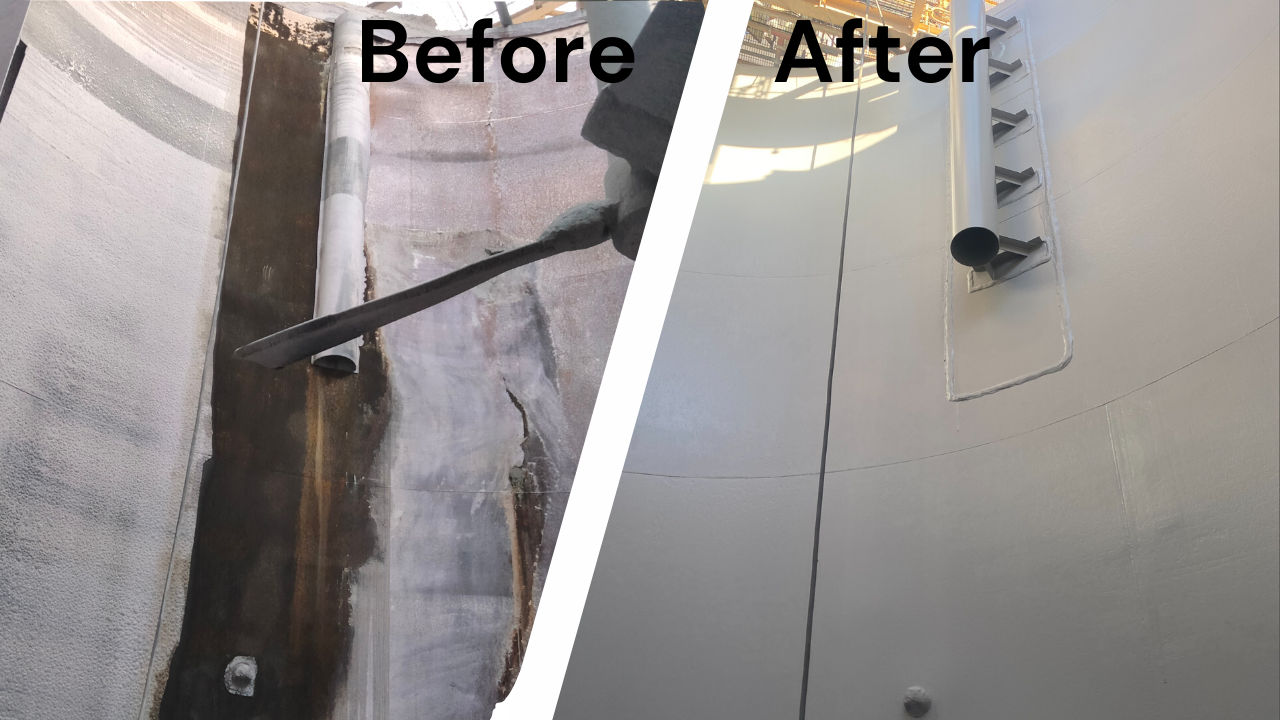
The Right Blast Standard for Every Application
Different coating and lining systems require different surface cleanliness levels and anchor profiles. Our blasting teams are experienced across the full range of ISO 8501 standards used in gold mine maintenance applications.
Thorough Blast Cleaning
Mill scale, rust, old coatings and foreign matter are removed to the extent that remaining traces appear as light stains in the form of spots or stripes. Used for less demanding coating environments and maintenance overcoating applications.
Typical Use: External structural steel maintenance recoatsVery Thorough Blast Cleaning
The standard most commonly specified for gold plant protective coating applications. The surface is free from visible oil, grease, dirt, dust, mill scale, rust and coating, with any remaining traces visible only as slight discolouration.
Typical Use: Structural steel, process pipework, launder and platform coatingBlast Cleaning to Visually Clean Steel
The highest level of blast cleanliness, the steel surface is completely free from all contamination and has a uniform metallic colour. Required for immersion-grade coating systems including CIL/CIP tank internal linings and cyanide-immersion service.
Typical Use: CIL/CIP tank internals, cyanide immersion linings, chemical containmentAnchor Profile Specification
Surface roughness (Rz) determines the mechanical adhesion between substrate and coating. We measure and document anchor profile using Testex replica tape to confirm the correct profile for each coating system, typically Rz 40–70 microns for gold plant applications.
Typical Use: All immersion-grade and chemical-resistant coating applicationsAbrasive Blasting Across the Gold Processing Circuit
Our blasting teams are mobilised to gold processing plants across the WA Goldfields and Queensland, preparing every asset class in the circuit to the correct standard prior to coating or lining application.
CIL & CIP Tank Internals
SA3 abrasive blasting of Carbon-in-Leach and Carbon-in-Pulp tank internal surfaces prior to novolac epoxy or rubber lining installation, the most demanding blast specification in gold processing maintenance.
Structural Steel
SA2.5 blast cleaning of structural columns, beams, girts and purlins across the processing plant, including confined space blasting of box sections and enclosed structural members where access is restricted.
Pipework & Launders
Internal and external blasting of process pipework, launders and chutes, including small-bore pipe internals and launder sections that require specialist blasting equipment to achieve the specified profile.
Pump Boxes & Cyclones
Blast preparation of pump box internals, cyclone housings and associated wet-area steelwork, creating the anchor profile required for ceramic-filled epoxy and rubber lining adhesion in high-velocity slurry service.
Trommels & Process Vessels
Blast cleaning of trommel shells, screens, leach vessels and agitator tanks, preparing worn or corroded surfaces for protective coating or rubber lining systems during planned gold mine shutdowns.
Containment & Bund Areas
Blast preparation of concrete and steel containment bunds, spill pads and cyanide storage areas, achieving the surface profile required for chemical-resistant coating systems in environmental containment applications.
Shutdown-Integrated Surface Preparation Done Right
Blasting within a shutdown window requires precise planning and execution. Delays in surface preparation flow directly into delays in coating application, which flows into delays in plant startup. Our teams are experienced in delivering to shutdown schedules without cutting corners on standard.
Pre-Blast Inspection
Existing coating condition, substrate profile and contamination levels assessed. Blast specification confirmed against the coating system being applied and the service environment of the asset.
Containment & Setup
Environmental containment erected to site requirements, blast media and spent abrasive contained, neighbouring plant and equipment protected, and site safety controls confirmed before blasting commences.
Abrasive Blasting
Blasting executed to the specified ISO 8501 standard by our own experienced operators, with continuous visual monitoring to maintain consistent cleanliness and profile across the entire prepared surface.
Profile Testing & Sign-Off
Surface cleanliness and anchor profile confirmed using Testex replica tape and visual comparators. Results documented and signed off before coating or lining application commences, no exceptions.
Surface Preparation Enables Every Other Wear Protection System
Sandblasting is the foundation. Once the correct surface is achieved, our teams apply the coating or lining system specified for that asset, all within the same shutdown window.
Our comprehensive wear protection systems for gold mines combine professional surface preparation with the full range of protective systems applied over the top:
Protective Coatings & Industrial Coatings
Epoxy, polyurethane and novolac coating systems applied directly over the prepared substrate, with the adhesion and service life that only a correctly blasted surface can deliver in cyanide and lime slurry environments.
Rubber Lining & Ceramic Wear Lining
Cold bonded rubber lining and high-density ceramic tile installation, both systems require a precisely prepared anchor profile to achieve the bond strength needed for gold plant service conditions.
Surface preparation is the critical first step in any wear protection programme for a gold processing plant. Explore our full comprehensive wear protection systems for gold mines, or contact our team to discuss shutdown-integrated blasting and coating services for your WA or Queensland operation.
Wear Protection SystemsServices Applied Over Our Blast Preparation
Every coating and lining system we apply begins with our abrasive blasting service. Explore the wear protection systems that go on after the surface is prepared.
Need Professional Sandblasting for Your Gold Mine Shutdown?
Talk directly with our team about your surface preparation requirements. We work to your shutdown schedule, your blast specification and your site's environmental requirements, across the WA Goldfields and Queensland gold operations.